How to Care for a Wool Suit: Steaming, Brushing, Storage and Dry Cleaning
Most wool-suit care happens between cleanings. Air and rest the suit, brush away surface dust, steam lightly when needed, respond to spills quickly, and let the care label decide when professional cleaning is required.
This is general care guidance. Always follow the sewn-in care label and any instructions supplied for the specific cloth and garment construction.

The care routine
Do less, but do it consistently
- After wearing
- Empty the pockets, air the suit, brush lightly, and let it rest on a supportive hanger.
- For wrinkles
- Let the cloth relax first; use restrained steam only when needed and never saturate the jacket.
- For spills
- Blot promptly with a clean white cloth. Do not scrub structured tailoring.
- For dry cleaning
- Follow the care label and the suit's condition, not a universal number of wears.
Need a fitting plan?
Share your travel dates and garment idea before you visit.
The short answer: care between wears matters most
A wool suit does not need aggressive cleaning after every wear. Most maintenance is simple: empty the pockets, hang the jacket correctly, let moisture and odour disperse, brush away surface dust, and give the cloth time to recover before wearing it again.
Steam is useful for light wrinkles, not a substitute for stain removal or dry cleaning. Professional cleaning is appropriate when the care label requires it, visible soil remains, a significant stain needs treatment, or airing no longer removes odour. There is no responsible dry-cleaning schedule that fits every suit and every wearer.
A practical wool-suit care schedule
Use the garment's actual condition as the trigger. The table below is a routine, not a rigid calendar.
| Care step | When | What to do | Avoid |
|---|---|---|---|
| After each wear | Before returning the suit to the wardrobe | Empty pockets, air, brush lightly, and rest on a shaped hanger | Crowding it into the wardrobe while damp or warm |
| Wrinkles | After rest has not released them | Use light moving steam and allow the garment to dry fully | Soaking the cloth or pressing hard on lapels and seams |
| Spill | Immediately | Blot with a clean white cloth and identify the substance | Rubbing, scrubbing, or applying an untested cleaner |
| Dry cleaning | When the label or the suit's condition requires it | Use a cleaner experienced with tailored garments | Cleaning automatically after every few wears |
| Long storage | At the end of a season or before a long break | Store clean and dry in a breathable cover; inspect periodically | Damp plastic, direct sun, or casual mothball use |
Start with the care label, not only the wool percentage
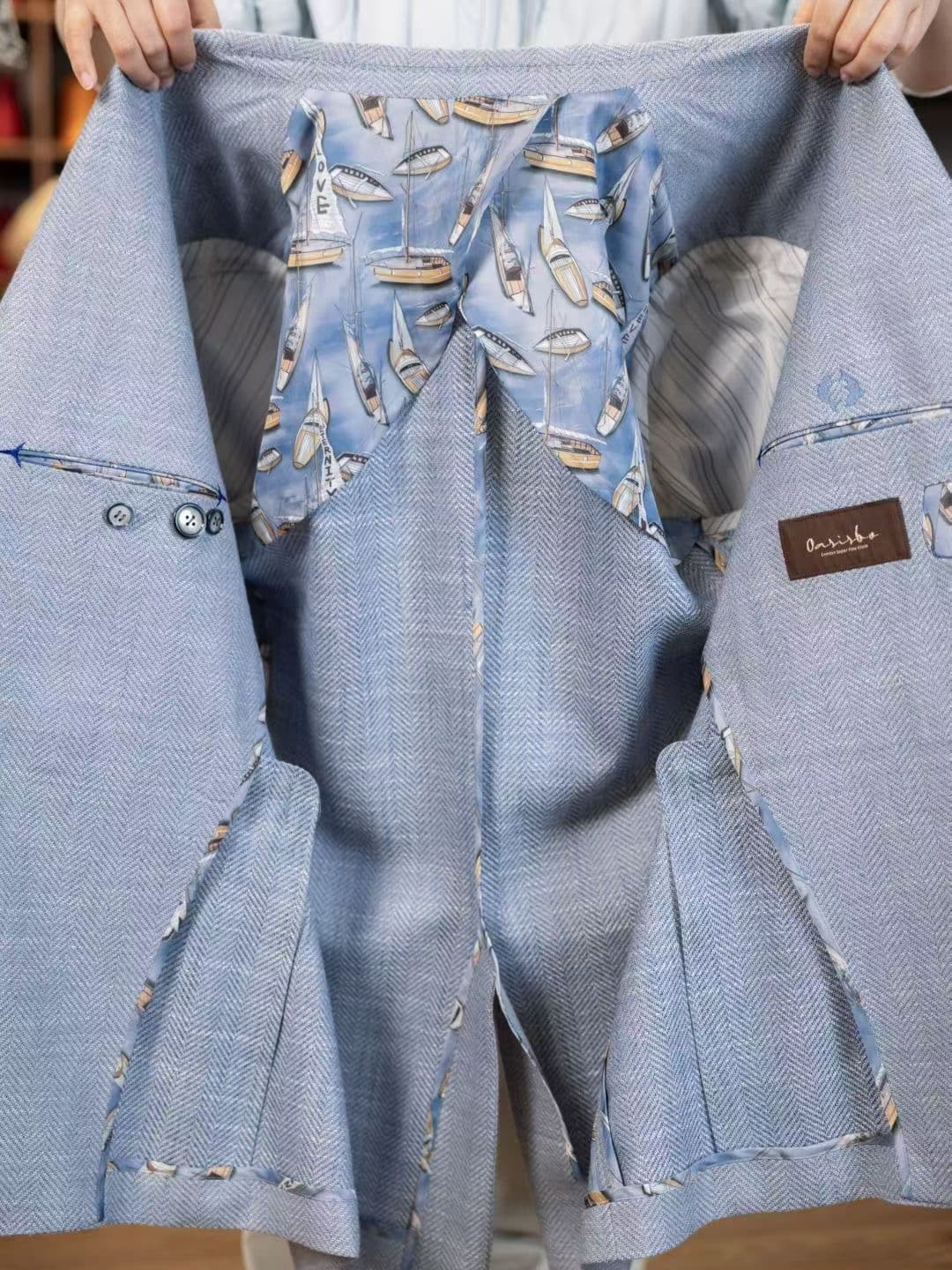
A label that says 100% wool describes the outer cloth, not every material inside the suit. The lining, chest canvas, shoulder padding, pocketing, interlinings, adhesives, and construction method all affect how the finished garment should be cleaned.
Read the sewn-in care symbols before steaming, ironing, spot treating, or sending the suit for cleaning. If the label says Dry Clean Only, use a professional cleaner. If it permits another method, that still does not mean a structured jacket should be treated like a washable wool sweater.
When the label is missing or unclear, ask the tailor or garment maker. A cautious professional assessment costs less than repairing puckered seams, distorted canvas, dye movement, or a flattened lapel.
After every wear: empty, air, brush, and rest
Remove your phone, wallet, keys, and other weight from every pocket. Leaving heavy objects in place can pull the pocket openings, lining, and outer cloth out of shape. Unbutton the jacket and place it on a broad hanger that supports the full shoulder rather than a thin wire hanger.
Give the suit open air before closing it inside a wardrobe or garment bag, especially after humid weather, a long meeting, or travel. Where possible, rotate suits and allow at least a day between wears. Rest lets wool release some creasing and retained moisture without extra treatment.
Use a clean, soft or medium clothes brush with light strokes rather than aggressive back-and-forth scrubbing. Work from the shoulders downward, paying attention to the collar, cuffs, pockets, trouser hems, and areas that collect dust. The goal is to lift surface particles before they settle into the cloth, not to polish the fabric.
- Empty all jacket and trouser pockets.
- Check cuffs, collar, lapels, seat, and trouser hems for marks.
- Brush lightly in a consistent direction.
- Hang the jacket on a broad, shaped hanger.
- Hang trousers from the waistband or cuffs with a proper trouser hanger.
- Let both pieces air before covering or closing the wardrobe.
How to steam a wool suit without flattening it
First let the suit hang. Minor travel wrinkles often soften after several hours without any steam. If creases remain and the care guidance permits it, use a garment steamer lightly, keep the head moving, and avoid holding it against the cloth.
Steam should relax the surface, not leave the jacket wet. Work in short passes, then allow the garment to dry completely on its hanger. Be especially restrained around the lapel roll, chest, shoulders, sleeve head, pocket edges, and seams, where heat, moisture, and pressure can alter intentional shaping.
A household iron is a higher-risk tool. Woolmark advises following the care label, using moderate heat and steam only when permitted, and avoiding heavy pressure. Use a pressing cloth and lift rather than slide. Deep creases, rippling, shine, or a collapsed lapel need a cleaner or tailor who understands structured garments.
- Do not use steam as a claim that the suit is clean or sanitised.
- Do not saturate the cloth, lining, or canvas.
- Do not press directly onto delicate wool or a shaped lapel.
- Do not put the suit away until it is fully dry and cool.
What to do when something spills
Act quickly but gently. Lift solid material with a blunt spoon or card, then blot liquid with a clean white, lint-free cloth. Work from the outside of the mark toward the centre so the spill does not spread. Do not rub; wet wool is more vulnerable to mechanical damage and friction can distort the surface.
Avoid generic online stain recipes on a structured suit. A treatment that is acceptable for a washable wool knit may move dye, leave a ring, or affect the lining and internal construction of a jacket. Test any permitted product in a hidden area and stop if colour transfers.
For oil, wine, ink, a large stain, unknown dye stability, or a Dry Clean Only garment, contact a professional. Tell the cleaner what was spilled, when it happened, and anything already applied. That information is more useful than trying several products before handing the problem over.
How often should you dry-clean a wool suit?
There is no universal number. A suit worn occasionally in a cool office has a different cleaning need from one worn weekly in summer humidity. Sweat, smoke, food, visible soil, spills, cloth colour, and how well the suit is aired all change the answer.
Dry-clean by condition rather than automatically after a set number of wears. Use professional cleaning when brushing and airing no longer resolve odour, visible grime remains, a stain needs expert treatment, the care label requires it, or a soiled suit is going into long-term storage.
When a matching suit needs a full cleaning cycle, send the jacket and trousers together, including an extra pair cut from the same cloth when practical. This helps the pieces age more consistently in colour and finish. Point out stains and ask the cleaner not to press sharp creases into areas that were designed to stay softly rolled.
If the suit gets wet
Blot excess water with a clean towel, reshape the garment on a suitable hanger, and let it dry naturally with air around it. Do not wring, brush, or scrub wet wool. Keep it away from radiators, hair dryers, and direct high heat, which can set distortion or create uneven drying.
Trousers can be laid flat briefly if the waistband or hanger would pull while they are very wet, then returned to a proper trouser hanger as they dry. A jacket that has been soaked, developed water marks, or lost its shape should be assessed by a cleaner or tailor familiar with canvas and structured shoulders.
Store a wool suit clean, dry, and supported
For everyday storage, use a shaped hanger, leave some air between garments, and keep the wardrobe cool, dry, and out of direct sunlight. A breathable cotton garment cover can protect against dust without trapping the suit in non-breathable plastic. Make sure the suit is fully dry before covering it.
Before seasonal storage, clean the suit according to its label if it is soiled, empty the pockets, and inspect the collar, underarms, cuffs, trouser seat, and hems. Food residue, skin oils, hair, and lint can make stored textiles more attractive to insects. Check the garment periodically for holes, loose fibres, webbing, cases, or larvae.
Cedar may smell pleasant and a cedar hanger may support a jacket, but cedar blocks are not reliable standalone moth control. Mothballs are pesticides and should only be used exactly as their label directs in a sealed space; they do not belong loose in an open wardrobe. Clean storage, inspection, housekeeping, and appropriate containment are the safer foundation.
Recovering a suit after a flight
Unpack the suit as soon as you reach the hotel. Empty the pockets, hang the jacket and trousers separately, and give the cloth time to release packing creases. Many minor wrinkles improve overnight without intervention.
If light steam is needed, follow the same restrained method used at home. Do not rely on a very hot shower to soak the bathroom and garment with uncontrolled humidity. For an important meeting or wedding, ask the hotel about professional pressing and explain that the jacket lapels should retain their roll.
A travel-friendly wool helps, but care still matters. The related wool-fabric guide explains why high-twist and resilient mid-weight cloths often recover better than very fine, soft cloth selected only for hand feel.
Choose wool by weight, weave, and usePlan shipping after leaving China
The Wuyue handover checklist
When collecting a Wuyue suit, ask about the specific cloth and sewn-in care label before you leave Shanghai. Note whether the fabric has any special pressing or cleaning requirements, and keep the cloth reference with your order record if available.
At home, build the simple routine first: supportive hangers, a clothes brush, restrained steam, space to air, and one cleaner who understands tailored jackets. That small kit is more useful than frequent cleaning or a cupboard full of stain products.
- Read and photograph the care label.
- Keep the fabric name, composition, and article reference with the order.
- Ask how the lapels and trousers should be pressed.
- Use a cleaner experienced with canvas and structured tailoring.
- Contact the tailor before attempting a major repair or aggressive stain treatment.
Sources
- Woolmark - Can You Dry Clean Merino Wool?Care-label guidance and the meaning of Dry Clean Only instructions for wool garments.
- Woolmark - Removing Stains from WoolGeneral wool stain-response principles, including prompt blotting, avoiding rubbing, testing, and informing the cleaner.
- Woolmark - How to Iron WoolCare-label checks, moderate heat, steam when permitted, and avoiding heavy pressure.
- Huntsman Savile Row - Garment Care GuideTailored-garment guidance on rotation, supportive hangers, brushing, restrained steam, storage, and professional cleaning.
- Canadian Conservation Institute - Textiles and CostumesPreventive-conservation guidance on wet textile handling, support, dust protection, insect evidence, and inspection.
- Oregon State University Extension - Clothes Moth ControlPeer-reviewed guidance on cleaning, containment, cedar limitations, and safe mothball use.
Plan your visit