How Should a Custom Suit Fit? A First-Fitting Checklist for Shanghai Visitors
A first fitting is where a custom suit becomes specific to your body. Use this practical checklist to assess balance, shoulders, collar, sleeves, trousers, and movement before you leave Shanghai.
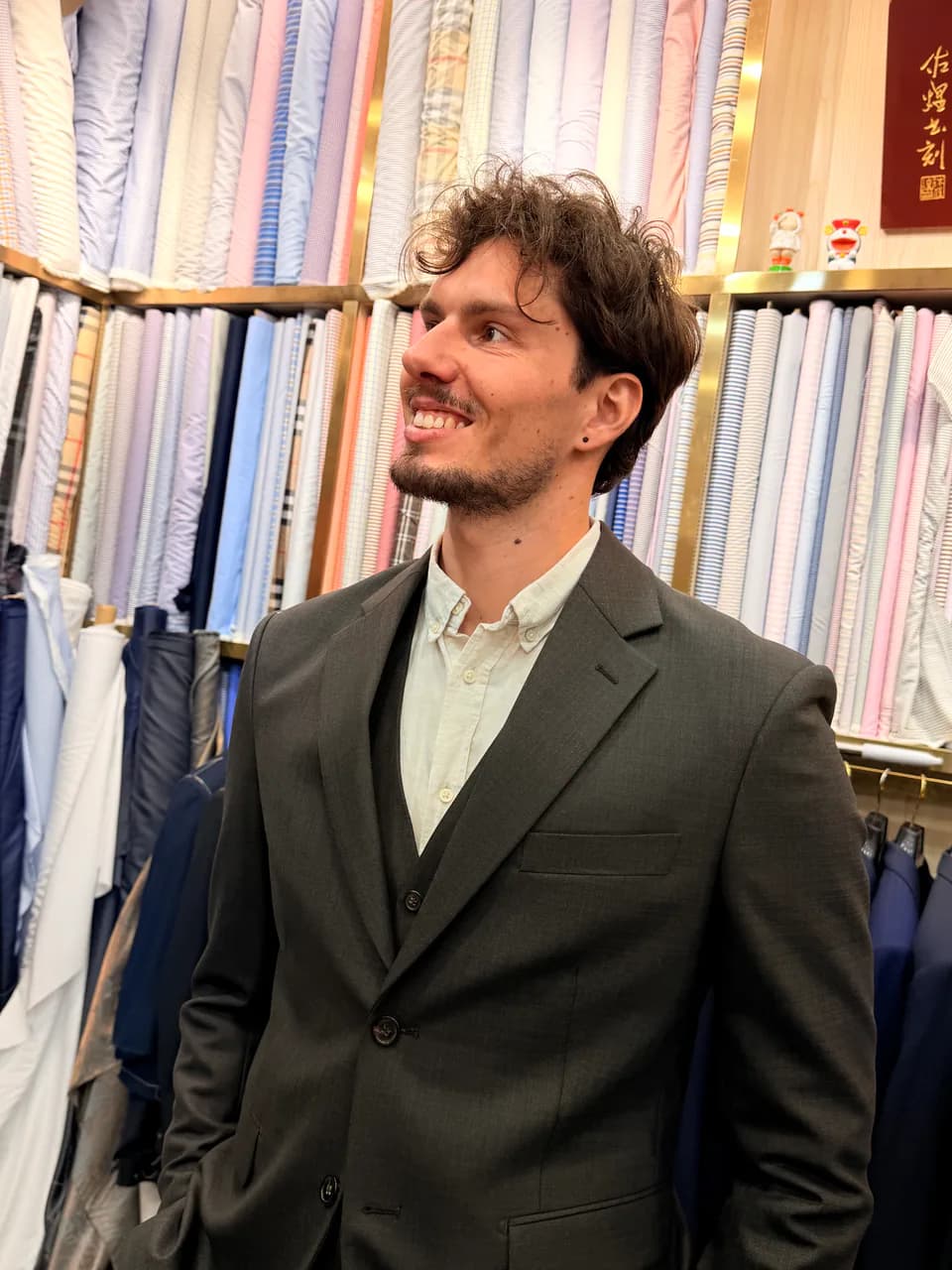
First-fitting checklist
What the fitting should establish
- Overall
- The jacket hangs level and clean without being forced tight.
- Upper body
- Collar, shoulders, chest, lapels, and sleeves sit in balance.
- Trousers
- Waist, rise, seat, thigh, and break work with your real shoes.
- Movement
- You can button, sit, walk, and reach normally without strain.
Need a fitting plan?
Share your travel dates and garment idea before you visit.
The short answer: balanced, clean, and comfortable
A custom suit should follow your posture without clinging to it. At a first fitting, look for a jacket that hangs in balance, a collar that stays close to the shirt collar, shoulders that follow your frame, and trousers that sit securely without pulling through the seat or thigh.
Do not judge fit only from a front-facing mirror. Turn to both sides, look at the back, button the jacket, sit down, walk, and move your arms as you would during a meeting or dinner. A suit that looks sharp only while you stand perfectly still is not finished fitting work.
First ask what stage of fitting you are seeing
A basted fitting, an unfinished try-on, and a nearly completed suit answer different questions. At an early fitting, the tailor may be checking balance, shoulder position, chest room, jacket length, and trouser shape before final sleeves, buttonholes, lining, or pressing are complete.
Ask what is temporary and what is already fixed. This prevents you from spending the appointment on an unfinished cuff or unpressed seam while a more important balance issue goes unmentioned.
1. Start with overall jacket balance
Stand naturally with your feet level and arms relaxed. The jacket should not make you lift your chest, pull your shoulders back, or hold your arms away from your body. From the side, the front and back should feel visually balanced rather than tipping sharply forward or backward.
With the jacket buttoned, look for a clean front. Strong horizontal pulling, a pronounced X around the button, lapels that bow away from the chest, or fronts that swing open can signal that the chest, waist, or balance needs adjustment. Some drape and shaping are intentional, so discuss the whole silhouette rather than treating every small fold as a defect.
2. Check collar, shoulders, and chest together
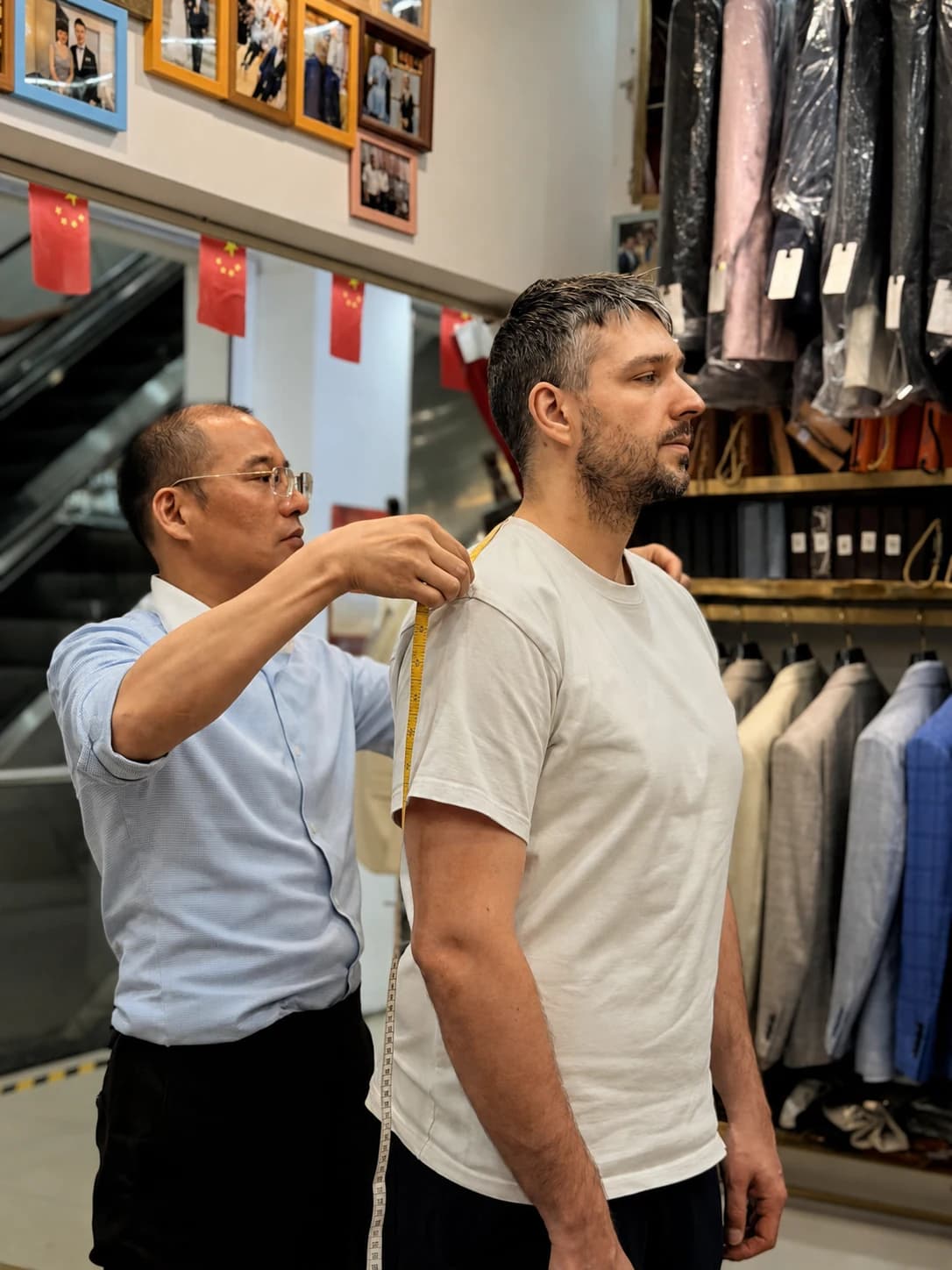
The jacket collar should sit close to the shirt collar when you stand normally. A visible gap, bunching below the neck, or one side lifting more than the other may point to posture or shoulder-balance corrections.
The shoulder line should follow your body cleanly without an obvious overhang, deep dent, or tight pressure at the sleeve head. Through the chest, you need enough room to breathe and move while keeping the lapels settled. These areas interact, so changing one can affect the others.
- Look at both shoulders, not only the higher or more visible side.
- Check the back below the collar for horizontal or diagonal folds.
- Button the jacket and confirm the lapels still lie against the chest.
- Tell the tailor if one shoulder normally carries a bag or feels restricted.
3. Confirm sleeves, jacket length, and shirt relationship
Sleeves should fall cleanly when your arms are relaxed. The amount of shirt cuff showing is a style choice, but it should be deliberate and reasonably consistent from side to side after accounting for posture and arm length.
Jacket length is also a proportion decision rather than one universal measurement. Check it from the front, side, and back with the trousers you will wear. The jacket should make sense with your torso, seat, rise, and intended level of formality, not simply match a reference model's length.
4. Test waist shape and real movement
A fitted waist does not mean the button should be under constant strain. Button the jacket, breathe normally, sit in a chair, reach forward as if greeting someone, and place your hands in the trouser pockets. The suit should keep its shape without making normal movement feel like a test.
Some lift when you raise both arms is normal for a tailored jacket. Focus on the movements you actually need: sitting through a meal, walking between meetings, driving, or giving a presentation. Tell the tailor where you feel pressure rather than asking generally for the whole jacket to be looser.
5. Check trousers with the shoes you will wear
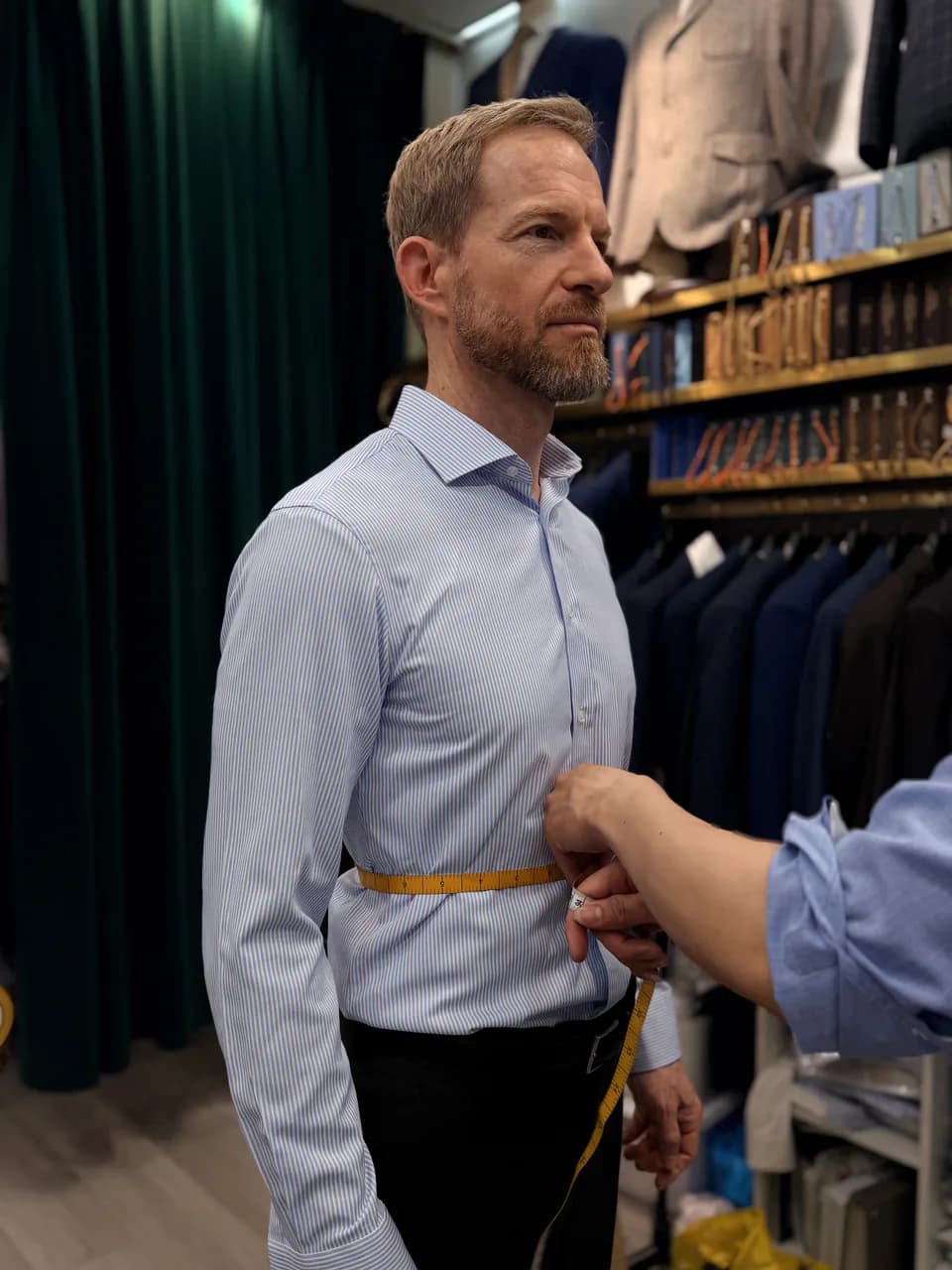
Trousers should stay at the intended waist without a belt doing all the work. The rise should feel comfortable when sitting, the seat should look clean without pulling, and the thigh should allow a normal stride. Check the front pockets and pleats, if any, for unwanted gaping.
Trouser break depends on hem width, shoe shape, and personal preference. Bring or wear the shoes intended for the suit so the tailor can judge the final length properly. Then sit down and walk; a clean standing line is not enough if the waistband, rise, or thigh becomes uncomfortable in use.
How to give useful fitting feedback
Describe what you see or feel in a specific position: 'the collar lifts when I stand normally,' 'the right thigh feels tight when I sit,' or 'I want less trouser break with these shoes.' That gives the tailor a problem to diagnose without prescribing the wrong alteration.
Before leaving the fitting, ask the tailor to summarise the planned changes and the next stage. For a short Shanghai visit, also reconfirm the next appointment, departure date, and whether final collection, hotel handoff, or shipping remains realistic after the corrections.
What Wuyue checks at a first fitting
At Wuyue, the first fitting is used to compare the garment with the measurements, posture notes, intended silhouette, and how the client actually moves. The priority is overall balance first, then collar and shoulders, chest and waist, sleeve position, and the trouser line.
Visitors should bring the shirt and shoes they expect to wear, or tell us clearly if those items are not available. Share your flight date before production begins so the fitting and any backup shipping plan can be arranged around the real trip rather than an assumed deadline.
Sources
- Gentleman's Gazette - How a Suit Should FitIndependent fit reference covering jacket balance, collar, shoulders, sleeves, trousers, and movement.
- Wuyue Bespoke - How Tailoring WorksWuyue's current consultation, measurement, fitting, and delivery process for Shanghai visitors.
Plan your visit