Women's Custom Tailoring in Shanghai: Suits, Pantsuits and Trousers
Women's custom tailoring should begin with proportion, movement, and the garment's real role. Plan a Shanghai pantsuit, blazer, tuxedo, or pair of tailored trousers without relying on a menswear template.
Current service scope
What Wuyue can discuss for a women's order
- Suits
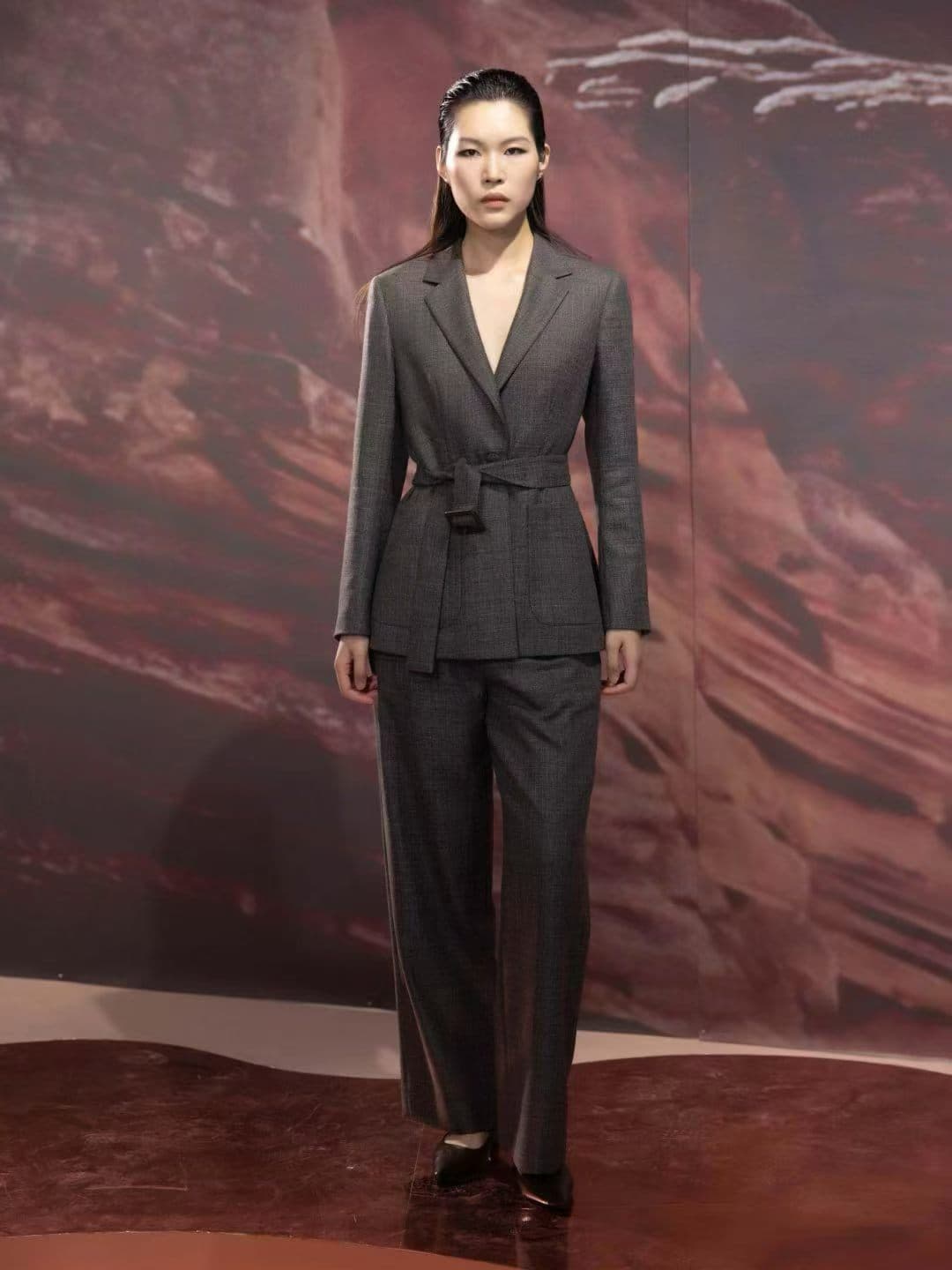
- Women's business suits, pantsuits, blazers, and tuxedos planned around an in-person fitting.
- Trousers
- Tailored wool or linen trousers, including separates that coordinate with a jacket.
- Fit
- Shoulder, bust, torso, waist, hip, rise, thigh, leg line, and movement are considered together.
- Not offered
- Dresses, skirts, and copied womenswear pieces are outside Wuyue's current service scope.
Need a fitting plan?
Share your travel dates and garment idea before you visit.
The short answer: commission suiting, not generic womenswear
Women's custom tailoring in Shanghai can be a practical answer when ready-to-wear jackets repeatedly fail through the torso, bust, shoulder, hip, or sleeve, or when trousers fit one area and pull in another. The order should still begin with a defined garment. "Womenswear" is too broad to describe a workshop's skill, construction method, or fitting plan.
Wuyue's current scope covers women's suits, pantsuits, blazers, tuxedos, and tailored trousers, including linen trousers. Dresses, skirts, and requests to copy other womenswear pieces are outside the current service. Stating that boundary early protects the client from a vague promise and lets the fitting focus on garments the workshop regularly constructs as tailoring.
A women's suit is not a smaller men's suit
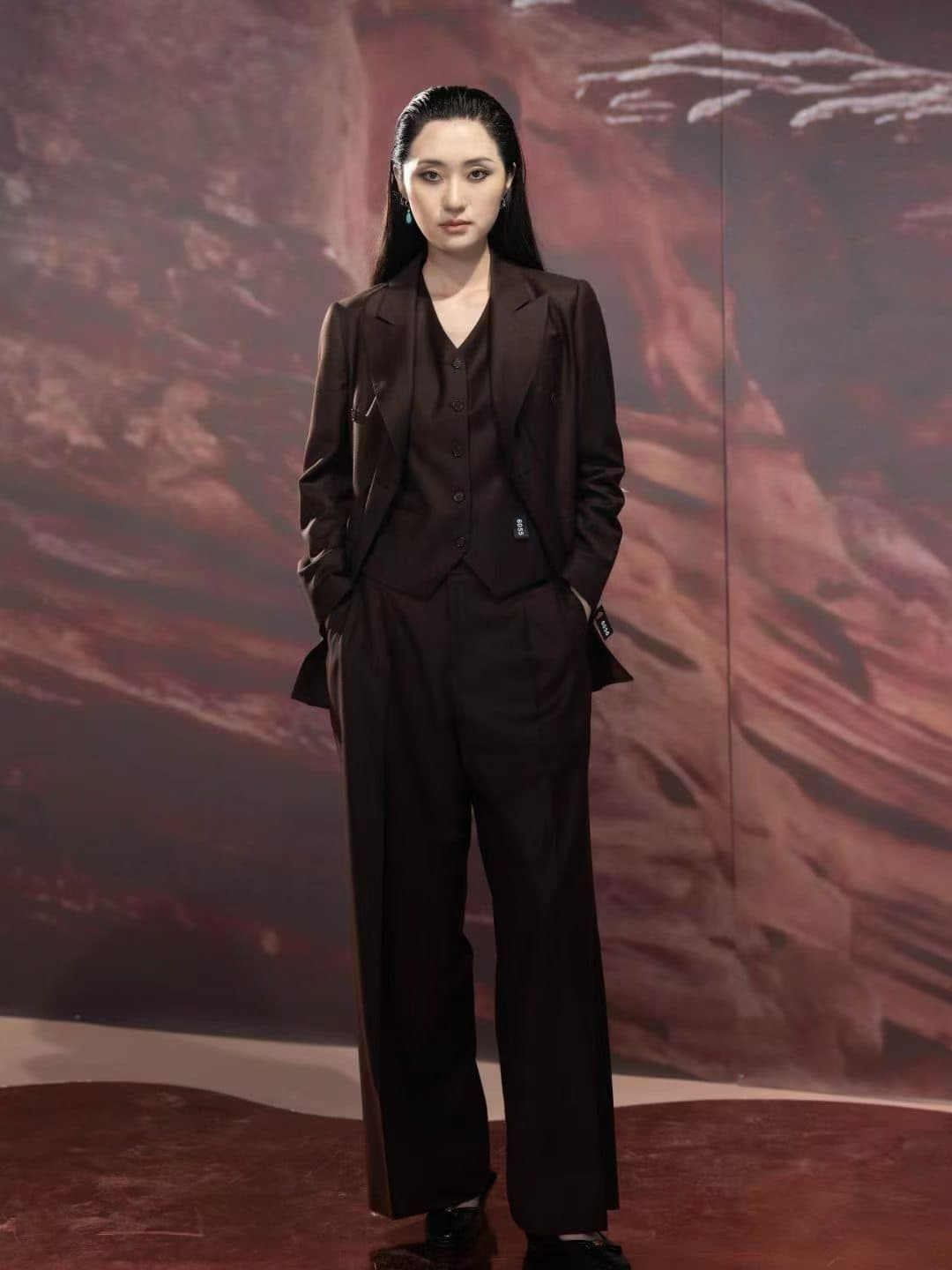
The lapels, pockets, canvas, vents, and trouser details may use familiar tailoring language, but the pattern has to resolve a different set of relationships for each wearer. Shoulder width cannot be adjusted without considering bust shaping and arm movement. Waist position cannot be chosen without considering torso length and jacket closure. Trouser rise cannot be separated from hip, seat, thigh, and sitting comfort.
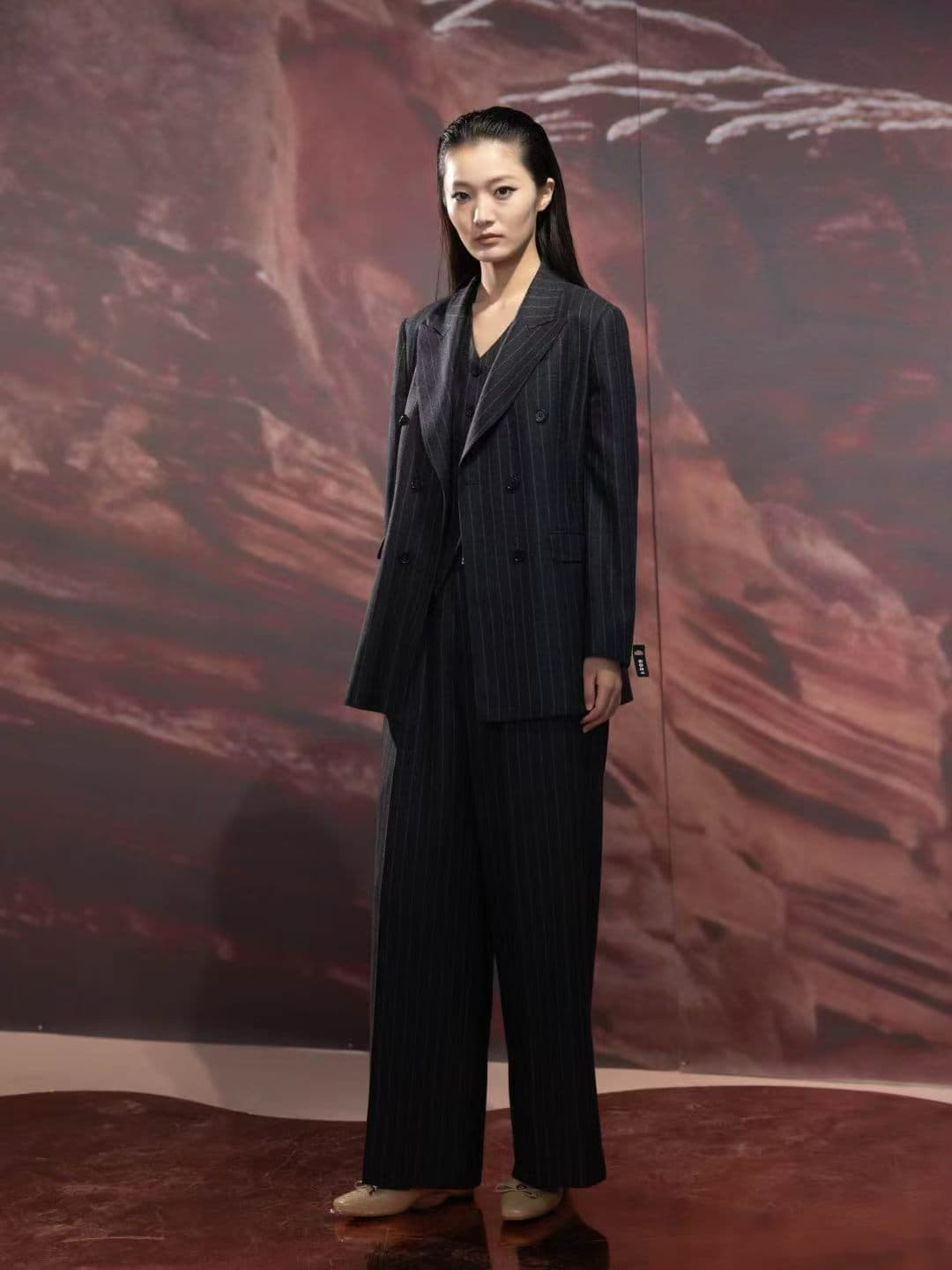
The solution is not to add shaping everywhere. Some clients want a defined waist; others want a straighter, more architectural line. A business blazer, relaxed linen suit, and women's tuxedo should not default to the same silhouette. Discuss the authority, softness, formality, and ease you want before selecting decorative details.
Choose the garment by its job
A clear use case prevents the order from becoming a catalogue of options. Bring the shoes, tops, and underlayers that affect the real outfit, then decide which garment combination will earn space in the wardrobe.
- Business pantsuit: prioritize repeat wear, comfortable sitting, useful pockets, cloth recovery, and compatibility with existing shirts or knitwear.
- Separate blazer: decide which trousers, denim, dresses, or other existing garments it must coordinate with, even though Wuyue is making only the blazer.
- Women's tuxedo: settle the lapel surface, shirt or top, waist treatment, trouser line, shoe height, and event dress code as one evening look.
- Tailored wool trousers: use a stable cloth and waistband construction suited to the frequency of wear and the intended jacket.
- Linen trousers: plan for airflow and a relaxed crease character while preserving opacity, rise, pocket behaviour, and seated comfort.
Fit priorities that deserve separate attention
A tape measure records useful dimensions, but the fitting shows how the garment balances on the body. Apparel research describes fit sessions as iterative: the wearer stands and moves through different postures while giving feedback about comfort, fit, and touch. That matters for a tailored suit because a clean front view can hide a pulling armhole, lifting hem, opening pocket, or uncomfortable seated rise.
- Shoulder and bust: check collar contact, lapel position, closure, sleeve pitch, and comfortable forward movement.
- Torso and waist: place the jacket button and shaping in relation to torso length rather than a standard gendered formula.
- Hip and jacket length: decide where the hem finishes and whether it hangs cleanly when the jacket is open and closed.
- Rise, seat, and thigh: test the waistband and pockets while standing, walking, and sitting.
- Leg line and shoes: set width and hem with the actual shoe height and the desired level of formality.
Use the guide for hard-to-fit proportions
Long torsos and size labels: describe the recurring problem
A recent buyer searching for a women's suit in Shanghai described wearing a US women's 12-14, having a long torso, and struggling with the quality and proportions of ready-to-wear suiting. That language is more useful than the size number alone. It tells the tailor that jacket length, button position, visual waist, sleeve relationship, and trouser rise may need to be considered together.
At the appointment, explain what ready-to-wear does wrong. Does the jacket close but ride up? Does the waist shaping sit too high? Are sleeves long enough only when the shoulders are too wide? Do trousers fit the hip but gap at the waist? A garment that demonstrates the problem can be as useful as one that fits well.
Select fabric for climate, structure, and repeat wear
There is no single women's suiting fabric. A worsted wool can give a business suit a clean line and useful recovery. A high-twist or more open weave can improve warm-weather performance. Linen is breathable and expressive but creases visibly, which should be treated as part of its character rather than a defect. Tuxedo cloth and lapel facings need to work under evening light.
Ask for the composition, weight, supplier or mill, and current article reference. Then handle the cloth against light and over the hand. The most expensive or finest-feeling swatch may not be the best choice for frequent travel, daily sitting, humid weather, or trousers that need abrasion resistance.
- Business use: prioritize recovery, opacity, durability, and a stable drape.
- Warm weather: compare weight and weave rather than assuming every light cloth breathes equally.
- Linen trousers: check transparency, pocket show-through, wrinkle character, and whether the cloth has enough body.
- Tuxedo: compare the body cloth and facing together under realistic light.
Plan the Shanghai fitting before the flight
Do not assume that a six-day visit guarantees a finished women's suit. The viable schedule depends on the garment, cloth availability, complexity, fitting results, and workshop capacity. Contact the tailor before arrival, book the first appointment early in the trip, and state the departure date before choosing the design.
When the in-person window is short, use it for the decisions that benefit most from being together: consultation, measurements, cloth approval, and the most informative fitting the schedule permits. Agree in advance whether the corrected garment can be completed after departure and shipped. International delivery charges, carrier timing, and destination duties should be confirmed separately.
Check realistic Shanghai tailoring timelinesPlan shipping after leaving China
What to bring and what to ask to see
Bring two or three reference images that show different views, a garment that reveals a recurring fit issue, and the shoes and top you expect to wear. References should communicate silhouette, lapel, length, trouser line, and mood. They should not become a promise to copy somebody else's body or garment exactly.
Ask the tailor to show genuine examples of previous women's suiting work where client permission allows. Look beyond the fabric and styling: inspect shoulder balance, collar contact, front closure, jacket hem, pocket behaviour, trouser rise, and the line through the seat and thigh. If the shop cannot explain how it adapted the pattern for the wearer, do not rely on a generic assurance that women's tailoring is easy.
- Which women's tailored garments do you currently accept?
- How will you adapt this reference to my torso, bust, hip, and movement?
- What will the first fitting test?
- Can I see relevant women's suit or trouser work?
- What is the realistic fitting and shipping plan for my travel dates?
- Which requested elements are outside your normal service?
Sources
- Reddit r/shanghai - Recommendations for a custom women's suitRecent buyer discussion identifying long-torso fit, US women's sizing, linen trousers, quality concerns, travel timing, and the need to inspect past women's work.
- Fashion and Textiles - Fit models' roles in identifying fit issuesOpen-access 2024 research on iterative fit sessions, movement, comfort, balance, and wearer feedback.
- Shanghai Municipal Government - Inside South Bund Fabric MarketOfficial visitor overview of made-to-measure shopping, general market timing, reference garments, and overseas delivery.
Plan your visit