Custom Suits for Tall, Athletic and Hard-to-Fit Bodies in Shanghai
The body is not the problem when standard sizing fails. Learn how a Shanghai tailor can assess height, posture, asymmetry, chest-to-waist drop, seat, thighs, and movement through a real fitting.
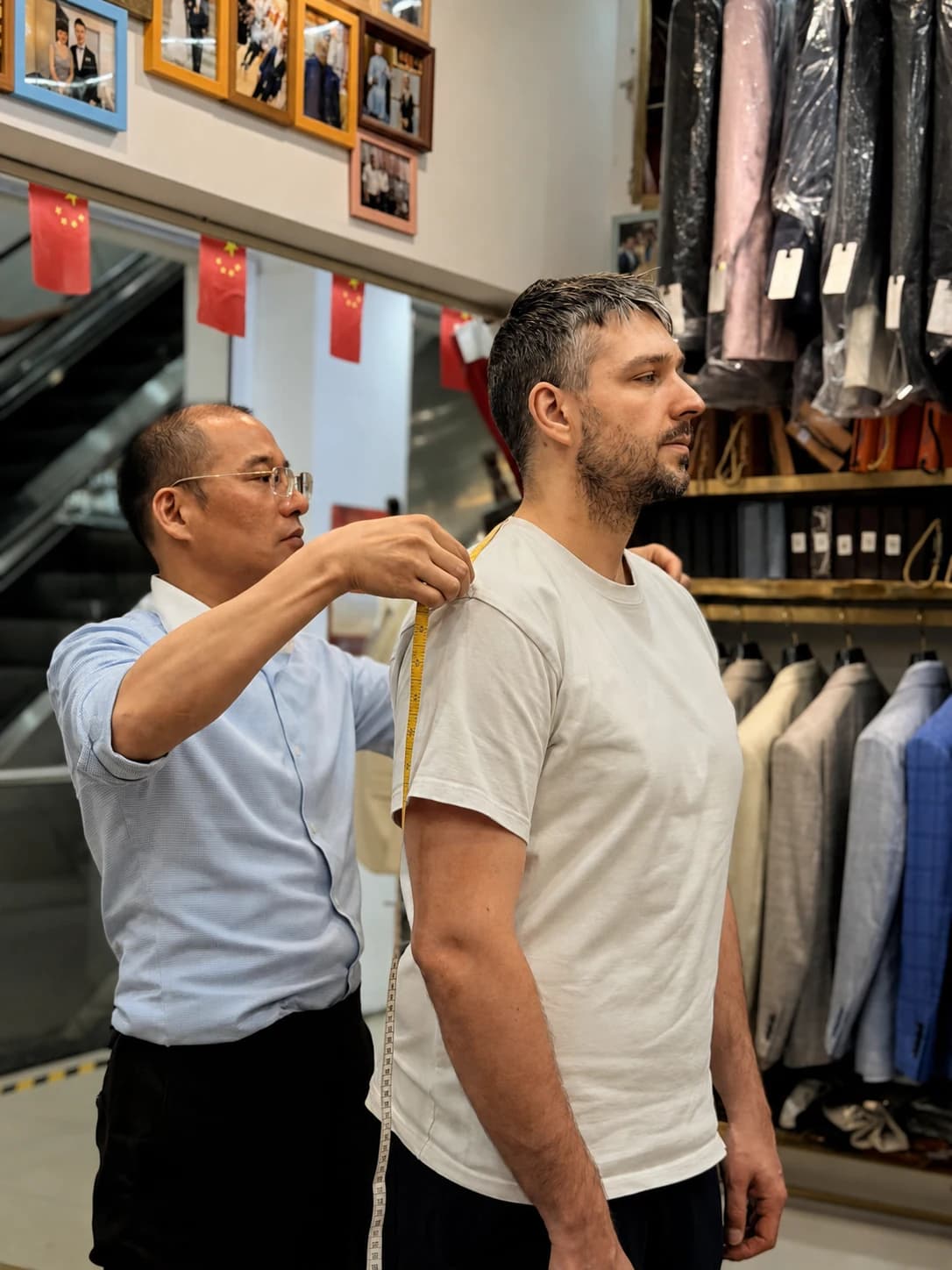
Fit starts here
What custom tailoring can address
- Proportion
- Height alone is not a pattern; torso, leg, arm, rise, and jacket length must work together.
- Drop
- Chest-to-waist and seat-to-waist relationships often matter more than a single retail size.
- Posture
- Shoulder slope, stance, back shape, and left-right asymmetry affect jacket balance.
- Movement
- A fitting should test sitting, walking, reaching, and comfortable arm movement.
Need a fitting plan?
Share your travel dates and garment idea before you visit.
Your body is not non-standard; the size block is limited
Searches such as "big and tall suits Shanghai," "athletic fit suit," and "tailor for tall men" describe the failure of ready-to-wear sizing, not a failure of the wearer. Retail garments have to group many bodies into a small number of sizes. When height, chest, waist, seat, thigh, arm length, or posture do not move together in the expected ratio, choosing a larger size often creates a new problem somewhere else.
Custom tailoring is useful because it can separate those relationships. The aim is not to make the body look smaller or force it toward an average. It is to give the garment enough length, room, balance, and structure for the individual wearer while preserving a deliberate silhouette.
Size and body shape are different inputs
Two people can share the same chest circumference and need different patterns. One may have a longer torso, another a more prominent abdomen; one may stand erect, another have a rounded upper back; one may have level shoulders, another a visible slope or left-right difference. Research on body-type-optimized made-to-measure patterns identifies proportion, chest-to-waist drop, and lateral posture as distinct fit variables rather than treating one circumference as the whole body.
That is why sending height, weight, and a jacket size is not enough for a first custom order. Those numbers help start a conversation, but they cannot show balance, shoulder shape, seat projection, or how the wearer holds the arms. An in-person measurement and fitting provide information that a size label cannot.
Common hard-to-fit relationships
A useful consultation describes the repeated ready-to-wear problem in concrete terms. The tailor can then decide whether the solution belongs in the pattern, the amount of ease, the garment length, or the construction.
- Tall or long torso: retail jackets may be long enough in the sleeve but too short in the body, with the button position sitting too high.
- Athletic chest and smaller waist: sizing for the chest can leave excess cloth at the waist, while sizing down can restrict the back and armholes.
- Large seat or thighs with a smaller waist: trousers may pull at the pockets and seat even when the waistband is loose.
- Prominent abdomen: front length, trouser rise, jacket overlap, and button position need to work together rather than being hidden by extra width.
- Uneven or sloping shoulders: the collar, shoulder line, sleeve pitch, and jacket hem can react to the asymmetry.
- Long or short arms relative to height: sleeve length must be balanced with jacket length and cuff exposure, not corrected in isolation.
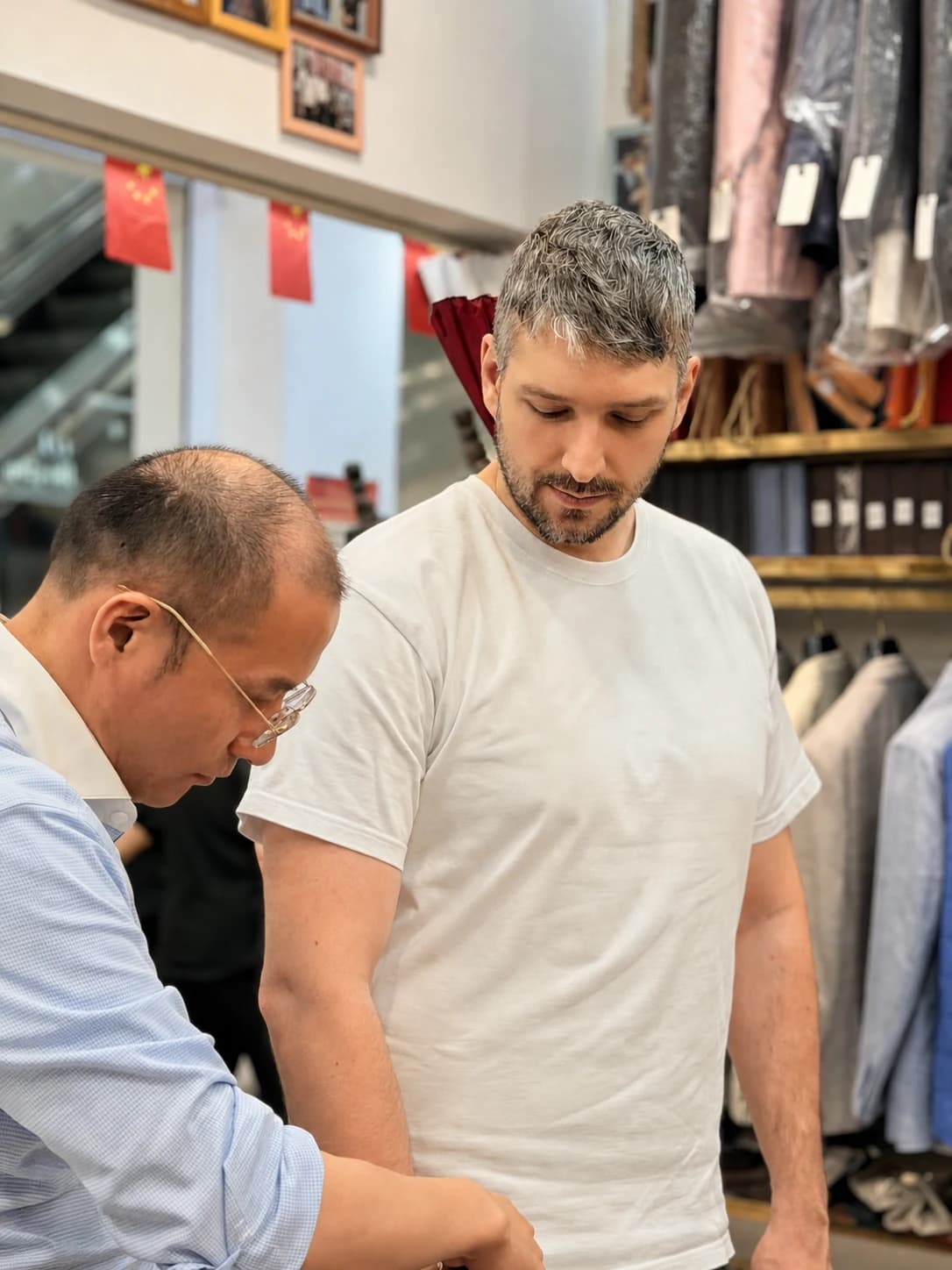
What the tailor should observe before cutting
Measurements establish distances and circumferences. Observation explains how those numbers sit in space. A tailor should see the client in a relaxed stance, from the front, side, and back, without asking them to stand like a mannequin. Shoes, shirt weight, and the layers normally worn under the suit also affect the brief.
Explain comfort and mobility needs early. A client who drives, flies weekly, presents on stage, lifts equipment, or sits for long meetings may need different ease and trouser decisions from somebody ordering an evening suit. More room is not automatically more comfortable: excess cloth can collapse or restrict movement in the wrong places.
- Natural shoulder level and slope.
- Head, neck, and upper-back position.
- Chest, abdomen, and seat projection from the side.
- Arm position and sleeve pitch.
- Front-to-back jacket balance and preferred trouser rise.
- The movements and seated positions required in real use.
Why the fitting matters more than extra measurements
A 2024 Fashion and Textiles study found that fit sessions rely on iterative feedback about comfort, fit, touch, and movement across several postures. That principle applies directly to an individual suit. The developing garment shows drag lines, collar gaps, hem imbalance, pocket flare, restricted movement, and areas with too much or too little ease.
Do not spend the entire fitting standing rigidly in front of a mirror. Sit down, walk, reach forward, move both arms, button and unbutton the jacket, and place objects in the trouser pockets. Tell the tailor what feels restrictive or unstable. Comfort feedback is part of the technical fitting, not a complaint to save until after delivery.
Use the first-fitting checklist
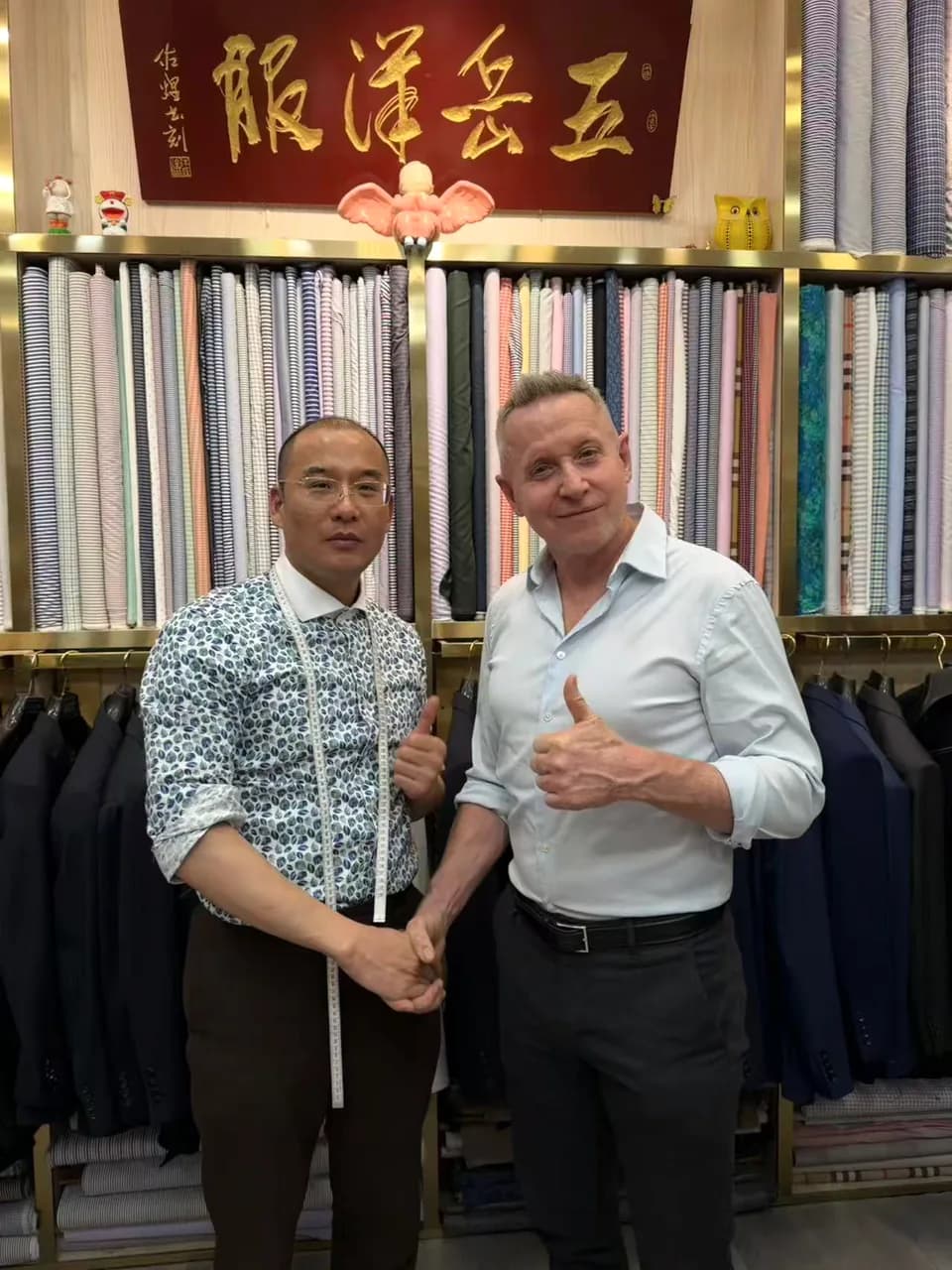
What to bring to a Shanghai appointment
Bring one well-fitting garment if you own one, but also bring the garment that demonstrates your recurring problem. The second piece can be more informative. Add two or three reference images for silhouette and details, the shoes and shirt type you expect to wear, and your travel and event dates.
Photographs should guide the conversation rather than become a copying instruction. A lapel, trouser line, or jacket length that works on another person may need to change for your proportions. Ask the tailor to explain which parts of the reference will transfer cleanly and which should be adapted.
- A garment that fits well and one that shows the problem.
- Front, side, and back reference images rather than one posed photograph.
- The shoes, shirt, belt, or braces relevant to the outfit.
- Your use case, climate, travel dates, and firm event deadline.
- Any mobility, sensory, or comfort requirement you want considered.
Set realistic expectations
Custom tailoring can improve proportion, comfort, and visual balance, but it cannot make every design compatible with every body or deadline. A very short jacket, narrow trouser, low rise, or rigid shoulder may work against the wearer's needs. A responsible tailor should explain those conflicts rather than promise an exact copy of a reference image.
Allow enough time for the fitting to change the garment. When the travel window is short, schedule the first appointment immediately and agree on shipping before paying. If your body weight or posture is actively changing, say so; saved measurements are a starting point for later orders, not a permanent record of the body.
Check realistic Shanghai suit timelinesPlan delivery after leaving China
Questions that reveal fit competence
You do not need to diagnose your own pattern. Ask the tailor to explain what they observe and how the fitting will test it. Specific answers are more useful than assurances that every body is easy.
- Which posture or proportion differences do you see, and where will they affect the garment?
- Will you adjust an existing block or develop a more individual pattern for this order?
- Which fit problem will the first fitting test?
- How much movement ease are you planning for my actual work or travel?
- What design request would you change for better proportion or comfort?
- What can still be corrected after I leave Shanghai?
Sources
- Fashion and Textiles - Body type optimized pattern libraryOpen-access 2025 study separating proportion, drop, posture, shoulder, abdomen, and hip factors in made-to-measure fit correction.
- Fashion and Textiles - Fit models' roles in identifying fit issuesOpen-access 2024 study on iterative fit sessions, movement, comfort, balance, and wearer feedback.
- Gentleman's Gazette - How a Suit Should FitIndependent visual reference covering shoulders, collar, chest, sleeves, jacket balance, and trousers.
Plan your visit